

introcuction African Safari Animals
Africa is a treasure trove of wildlife for safari enthusiasts to explore and enjoy. The Big Five is always a star attraction for visitors, but hundreds of animals will have you glued to your binoculars. If you plan on visiting Africa, consider viewing the incredible animal list we provide below.
African Buffalo
The African buffalo is one of the "Big Five" and a favorite to view on safari. They travel in large herds of hundreds and even thousands and leave a dust cloud when they migrate through the Serengeti and open planes. It is a sight to behold when this 1,840-pound (835 kg) herbivore passes by.
Interestingly, the buffalo is also nicknamed "Black Death," and the most common reason is that it attacks hunters after being wounded. An adult buffalo lives between 11 and 22 years and relies on dense forestation to satisfy its large appetite.
Botswana is known as the best destination for viewing African buffalo. When they move between the Okavango Delta and Chobe National Park, visitors use boats and canoes to view them as they drink water before moving on to a different grazing spot.
Elephant
The African elephant, with an adult height of about 13 feet (4 m) and a weight of up to 7 ton (6,350 kg), is the largest land animal in the world. As one of the "Big Five," the gentle giant's size and laid-back personality make it popular amongst wildlife spectators, especially in Botswana's Chobe National Park.
With its Jurassic appearance, few challenge the elephant, but in rare circumstances, it does fall victim to a pack of lions or hyenas. Small herds travel between waterholes and love to use their trunks to spray water, which also functions as a hand to pick fruit and leaves from tall trees.
Onlookers often underestimate the calm nature of this giant and venture to close and provoke it. These close human encounters usually lead to retaliation from the animal and cause about 100 fatalities every year.
The African elephant, which can live up to 70 years, is found throughout the African continent, including Botswana, Namibia, and South Africa's Kruger National Park.
Leopard
Of all the "Big Five," the leopard is the most difficult to spot due to its shy nature, which explains its popularity among safari fans. Its spotted coat helps conceal it in thick bushes and trees during the day, and because it hunts at night, observers primarily see it after dark.
These impressive carnivores weigh 37 - 143 pounds (17 - 65 kg) and are phenomenal hunters that run 36 mph. (58 kph). Leopards jump 10 feet (3 m) straight up in the air and can leap 20 feet (6 m) in a single bound, making seeing them drag prey up a tree a memorable moment on safari.
Leopard fanatics consider Namibia the best place to view this shy cat, or you can view our safaris and tours for a visit to Zambia's South Luangwa National Park (Link Opportunity: South Luangwa National Park), Kenya's Masai Mara National Reserve, and South Africa's Greater Kruger Region.
Lion
The lion, known as the king of the jungle, is also considered the most popular to view of the Big Five, and enthusiasts believe no safari is complete without this giant cat. With its charismatic, strong, and gorgeous stature, everyone wants to catch a glimpse of the aptly named 'King of Beasts.'
At 11 feet (3.35 m) in length, the lion is the largest cat species on the African continent. It weighs 277 - 600 pounds (125 - 272 kg). Lions hunt in packs, which sets them apart from other big cats. Lions living near settlements acquire a taste for livestock and take about 100 human lives annually.
Being at the top of the food chain means that lions can live between 10 and 18 years. Today, lions are scattered all over Africa, especially in sub-Saharan African countries; however, their numbers are most significant in the grassy plains, open woodlands, and savannas of East and Southern Africa.
Generally, cats love to climb trees, but not the lion, except the few in Uganda's Queen Elizabeth National Park (Link Opportunity: Queen Elizabeth National Park) who find relaxing on a tree branch quite the treat.
Rhinoceros
Nothing exclaims power like the rhinoceros, and Africa is home to both the black and white rhino. The black rhino weighs up to 1.5 ton (1,360 kg) and has a pointed bottom lip, whereas the white rhino weighs up to 2 ton (1,814 kg) and has a square bottom lip.
Poachers, especially in South Africa's Hluhluwe iMfolozi Park and Namibia, kill rhinoceros to harvest their horns and disregard the rest of the animals, causing their number to decline. In 2018, there were 20,000 white rhinos, and in 2024, only 16,000 white rhinos remained. In a year, the black rhino population decreased by 1%; in 2023, only 6,487 remained.
Rhinos are shy and avoid attention, but chances are good that you’ll be able to catch a glimpse of some during one of our safaris in South Africa’s Kruger National Park or Namibia's Etosha National Park (Link Opportunity: Etosha National Park).
Giraffe
Giraffes are the tallest mammals on Earth, identified by their long legs, high necks, and characteristically striped coats. These gentle herbivores use their 18.7 feet (5.7 m) height to reach the leaves of acacia trees that no other African safari animal can.
Giraffes are the largest herbivore animals if you can believe it. They weigh up to 2 ton (1,814 kg). Uganda is also home to Murchison Falls National Park, where conservationists have successfully lobbied for giraffes and bred them and where efforts have saved certain species from extinction.
As big as they are, giraffes are vulnerable to predators like lions, leopards, hyenas, and crocodiles, with the calves being the easiest target. To create awareness, the Giraffe Conservation Foundation introduced World Giraffe Day and synced it with the longest day of the year, generally "21 June."
Giraffes prefer areas with trees, adapting to continuous woodland and savanna environments south of the Sahara and dense forests and open plains.
Mountain Gorilla
Mountain gorillas are known for their close family ties and their human-like behavior and faces. This primate species shares 98% of human DNA, which makes getting close to one a surreal experience. Safari fans should consider visiting the borders of the DRC, Uganda, DRC, and Rwanda to see these primates.
With a maximum height of 6 feet (1.8 m) and a maximum weight of 485 pounds (220 kg), male primates are the largest in the world. Although their exact age is unknown, experts estimate they can live up to 50 years in captivity and 35 to 40 years in the wild.
View predators other than the occasional leopard threaten Mountain gorillas. Their biggest threats are habitat loss, bushmeat hunting, and disease spread from humans. Trekking into deep forests is necessary to witness these primates in their native environment.
Viewing them close by requires a special permit and allows visitors to spend one hour with them. By booking one of our tours to Uganda's Bwindi Impenetrable Forest or Rwanda's Volcanoes National Park, we can help you make this unforgettable bucket-list experience possible.
Pangolin
Due to their elusiveness, we often consider pangolins the most significant find on safari. They primarily feed on ants and termites and can be found in swamp forests and floodplain grasslands or curled up into a ball when they feel threatened.
International law protects eight species of pangolins. Africa is home to the Black-bellied, White-bellied, Giant Ground pangolin and Temminck's Ground pangolin. Two are considered endangered and are on the IUCN Red List of Threatened Species.
Due to habitat loss, poaching, and predators like hyenas and leopards, pangolins have become one of the most endangered mammals globally. Many reserves report occasional sightings, including those in Hwange (Zimbabwe) (Link Opportunity: Hwange National Park), Serengeti (Tanzania), and South Africa Kruger National Park.
Zabia's South Luangwa National Park is one of the best places to see the Pangolin, and Africa Safaris provides visitors with all the information they need to experience this rare species.
Aardvark
With a pig-like nose on a long, slender snout, the aardvark resembles "SET," the Egyptian deity inspired by the mythical origins of this nocturnal burrowing mammal.
In the wild, the aardvark lives between 18 and 23 years but can live up to 30 years in captivity. Like the anteater, its diet mainly consists of termites and other insects, and getting a glimpse of one requires an experienced guide and tracker.
An excellent sense of hearing helps them avoid being caught off guard by predators like leopards, pythons, hyenas, lions, spot demands, and explore their burrows during nighttime drives.
These fantastic animals live in a variety of habitats, such as savannas, rainforests, woodlands, and thickets in the semi-arid parts of southern Africa, especially in places like the southern Kalahari, Namibia's Damaraland, Botswana's Makgadikgadi Pans, and South Africa's Karoo.
African Wild Dog
Wild dogs, sometimes called painted wolves, are the largest canines on the continent and travel in large packs of up to 40. These hardy, intelligent animals can run 35 mph. (56 kph), which makes them highly effective hunters. They boast an impressive 85% success rate.
Wild dogs are somewhat different from other social carnivores, and their weaned pups are given priority at the kill to boost their chance of survival. Generally, African wild dogs weigh 40 - 79 pounds (18 -36 kg), but hunters should not underestimate their small size during a hunt.
The IUCN lists the African wild dog as an endangered species, and researchers have recorded only 7,000 still running in the wild. If that seems a lot, consider that of the 7,000, only 1,500 are adults, leaving 5,500 vulnerable pups to become adults and secure this species' future.
Wild dogs prefer dense forests to open plains and can appear unexpectedly in many areas. You often see them in regions like Hwange in Zimbabwe and Zambia's South Luangwa (Link Opportunity: South Luangwa National Park). Visiting Zambia's Mana Pools (Link Opportunity: Mana Pools National Park) is an excellent idea for a close view because some packs allow close viewing, even on foot.
Grevy's Zebra
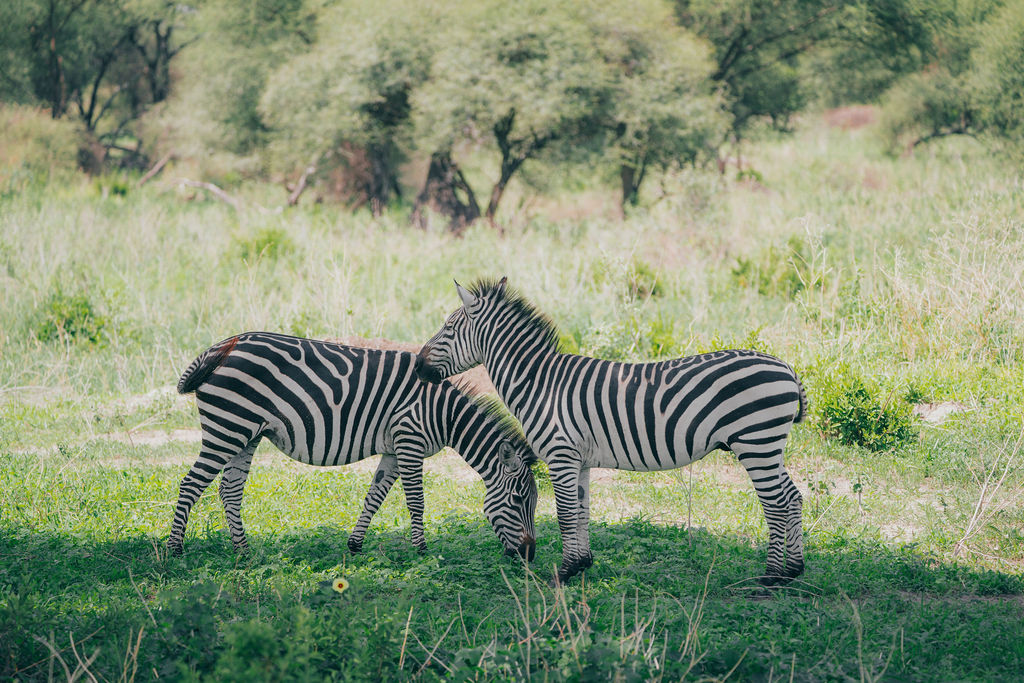
All zebras have black and white stripes, but the Grevy's are narrower than all other zebra species. Zebras use their sharp eyesight and hearing to avoid predators like hyenas, lions, hunting dogs, cheetahs, and leopards, but generally do not mind humans coming close.
Grevy’s typically stand 4 - 5 feet (1.2 - 1.5 m) tall, can grow up to 7.5 feet (2.2 m) in length, and weigh anywhere from 770 - 950 pounds (349 - 431 kg). In the wild, they usually live between 20 and 25 years, while those in captivity often reach ages up to 30.
The Lewa Wildlife Conservancy actively protects Grevy's zebras and safeguards their survival. Grevy's prefer grasslands and semi-arid scrubs alongside other grazers. Safari enthusiasts can view them on open plains in northern Kenya’s Samburu National Reserve or the Uaso Nyiro riverbanks.
Roan Antelope
The roan antelope is the largest species characterized by its horse-like physique. It typically stands 4.5 - 5 feet (1.3 - 1.5 m) tall at the shoulder and weighs 495 - 660 pounds (224 - 299 kg). In the wild, roan antelopes can live for up to 17 years.
These antelopes primarily graze on grass, but they do not mind chewing on shoots, leaves, stems, and twigs when available. They can be found in savannas and lightly wooded grasslands close to water and prefer medium to tall grass.
The roan antelope uses its speed to escape predators like leopards, hyenas, and lions, and if necessary, they will defend themselves using their scimitar-shaped horns.
One of the best places to observe these striking animals is Malawi's Nyika Plateau (Link Opportunity: Nyika National Park), where large herds gather to grace the grasslands.
Hyena
The hyena is one of the most intriguing animals on an African safari. The clan best recognizes it for its laughing sound and bizarre social interactions. There are three distinct species of hyena: the spotted, striped, and brown.
Many portray hyenas as weak scavengers, but their bite exerts 1,100 psi, almost twice the strength of a lion's 650 psi.
A typical hyena weighs 77 - 176 pounds (35 - 80 kg) and measures 37 - 60 inches (94 - 152 cm) in length, standing 30 - 33 inches (76 - 83 cm) tall at the shoulder. They typically hunt as a group, and their strategy involves chasing zebras, wildebeest, and gazelles for distances of up to 1.8 miles (3 km) at speeds reaching 40 miles per hour (64 kph).
In the wild, hyenas can live for up to 20 years, while in captivity, they may reach 25 years. These animals thrive in various habitats where wildlife is abundant, including open plains, dry bushland, rocky areas, and even mountainous regions up to 13,000 feet (4 km).
Although hyenas are primarily nocturnal, they often appear during dusk and dawn, particularly at the waterholes in Etosha National Park, one of our 15 best safari destinations in Africa. They also scavenge on carcasses left behind by leopards and lions.
Baboon
Africa is home to the Olive, Yellow, Chacma, Guinea, and Hamadryas baboons. Another, the "Gelada," is also a baboon, but researchers consider it a separate species. You can only find it on safari in Ethiopia's Remote Highlands, specifically in the Simien National Park (Link Opportunity: Simien Mountains National Park) and Bale Mountains National Park (Link Opportunity: Bale Mountains National Park).
People often see baboons throughout much of Africa, particularly near roadsides and picnic areas, where they rummage through trash or snag treats from unsuspecting picnickers. As omnivores, they will eat almost anything edible, though they prefer fruit.
Trees provide comfort and safety, especially for hyenas, but not for leopards, who have no problem picking one, even from a high branch.
Baboons thrive in Africa and commonly inhabit semi-arid environments like savannas and tropical forests. Various regions across the continent host these five distinct species of baboons.
Wildebeest
There are two species, the black and the larger blue wildebeest, found in Africa. A favorite safari event is the wildebeest's great migration through the Serengeti. Our Complete Guide on Tanzania Safaris provides enthusiasts with information regarding migration and other safari opportunities.
Wildebeests typically live about 20 years, but few live more than 40. As herbivores, they primarily graze on vegetation and grass and inhabit the savannahs and grasslands of South and East Africa.
The blue wildebeest is the most prevalent large game species in East Africa in terms of population. Spotting a wildebeest in Africa is one of the more manageable tasks for safari visitors, especially in Zambia's Liuwa Plain National Park, Maasai Mara National Reserve in Kenya, and Tanzania's Serengeti National Park.
Conclusion
Africa is known for its abundance and unmatched variety of animals to visit while on safari, and no one is better than getting you there than Africa Safaris. The Big Five will provide excitement, but many other majestic and rare animals are worth visiting, even in the most remote places.


 Botswana
 Ethiopia
 Kenya
 Malawi
 Mozambique
 Continue with Google


